By Cosmas Okereafor
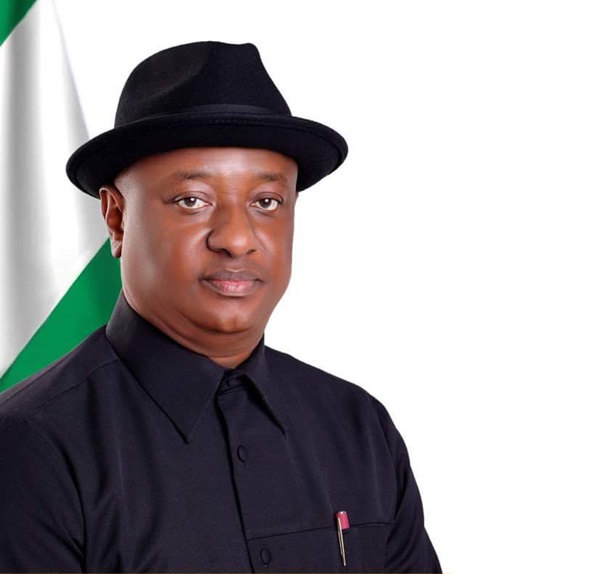
The clamour for genuine and meaningful growth in the aviation sector of the Nigeria economy by the operators in the system and policy makers once again came alive, following a two day event on Nigeria Aircraft Acquisition and Investment Summit (NAAIS). It was a roll call of who is who in the aviation industry for Passenger and Cargo airlines Chief Executives. The colourful event which took place at the legendary Federal Palace Hotel, Victoria Island, Lagos, many said was very strategic and timely.In his opening speech, the Minister of Aviation and Aerospace Development, Barrister Festus Keyamo (SAN), highlights reforms and made case why Nigeria today stands a better chance to access opportunities globally as it relates to aircraft financing.The minister anchored his position on the sweeping reforms by the current administration of President Bola Ahmed Tinubu which he said has taken deliberate steps to de-risk aviation investment in Nigeria even as he alluded to the fact that, there is strong signals that the centre of gravity of future aviation growth is shifting toward emerging markets which Nigeria is one of them.Specifically, the Minister pointed that, the reforms which are billowing across all spectrum of the aviation industry are aimed also at strengthening the legal framework for aircraft leasing which are necessary for empowering local airlines to be able to access dry- lease as well as reducing leasing cost and improving global rating.
Pointedly, the Minister also remarked that capital which is the crux of the issue in airline business does not simply chase opportunity but rather chases bankable certainty and Nigeria he said has restored that certainty.” These reforms matter because capital does not simply chase opportunity, it chases bankable certainty. And Nigeria has worked to restore that certainty”.The Minister also acknowledged the fact that over the years that local operators faced the herculean task of aircraft acquisition largely due to paucity of funds but stressed that, the renewed confidence and capacity which the system and its operators have demonstrated so far should pave way for better opportunities going forward. “Without modern and fuel efficient fleets, Nigerian airlines cannot compete sustainably. Without financing certainty, they cannot scale. Without institutional confidence. global lessors and lenders will remain cautious. Without local maintenance capacity, asset productivity suffers. Without skilled people, growth cannot be sustained”. Going further, the minister stated that, this summit is so critical, such that, its not woven around only on airplane but also on well designed financing ecosystem for common good. ” We are convening OEMs, lessors, banks, export credit institutions, insurers, regulators and operators to move from fragmented conversations to structured transactions ; we are aligning market demands with capital solutions.
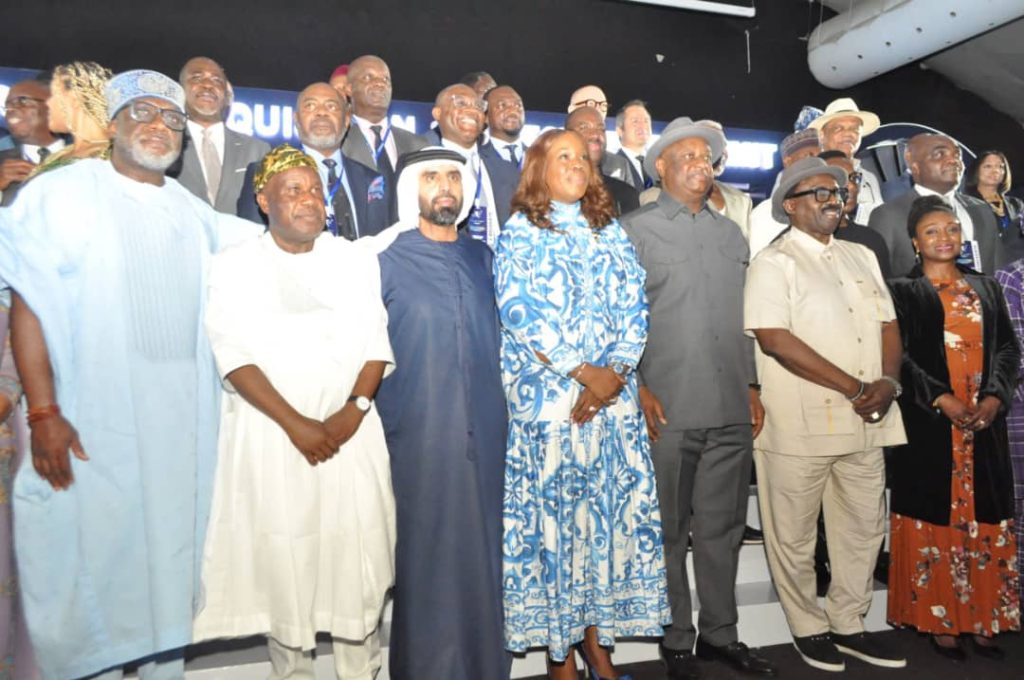
We are building the conditions for fleet modernization, dry lease scale up, local MRO development, aviation workforce expansion, and stronger route economics for Nigerian carriers. In essence, we are working to close the gap between Nigeria’s aviation potential and its realized aviation capacity”.The minister also spoke on the trapped airline funds way back which he confirmed that, IATA had reported that Nigeria had cleared up to 98% of previously blocked airline funds by mid 2024.’ Beyond legal reforms, we have made measurable progress on the long standing issue of trapped airline funds. For instance, IATA reported that Nigeria had cleared 98% of previously blocked airline funds by mid 2024, and later cited Nigeria as a clear example of how backlog resolution can be successfully achieved through constructive engagement and phased repatriation. In fact, the action sent an important message to global airlines, financiers and investors ; Nigeria understands the liquidity, convertibility, and repatriation are not side issues; they are foundational to market confidence”. The Minister stated.On his part, the Director General of the Nigeria Civil Aviation Authority (NCAA), Capt. Chris Najomo, described the theme of the summit; “Unlocking Capital, Confidence and Capacity in Nigeria Aviation” as timely and hinted that, NCAA is clearly anchored on; Ease of Doing Business without compromising its standards. He stated that, the Nigeria aviation market is open, structured and reform driven saying that, the regulator is proactive, data driven and internationally aligned.
Najomo also told the world audience that Nigeria airlines are ready to engage responsibly and competitively and however advised that aircraft financiers and lessors alike have nothing to worry about in the Nigeria aviation ecosystem.The DG stressed that Nigeria has domesticated the Cape Town Convention in the Civil Aviation Act of 2022 in order to boost aviation sector growth. He again explained that national capacity must be strengthened to enhance the development of local Maintenance, Repair and Overhaul (MRO)” National capacity must be strengthened through , for example, the development of local Maintenance, Repair and Overhaul (MRO), facilities. Expanding fleet size without corresponding Maintenance capability limits the overall benefits of investment and lead to significant capital outflow”, he stressed. Engr Farouk Ahmed, the MD/CEO, Nigeria Airspace Management Agency (NAMA), on his goodwill message pointed that, NAMA, the manager of the Nigeria airspace sees its activities as critical national asset whose responsibility according to the MD goes beyond traffic control adding that, NAMA statutorily creates operational certainty that allows airlines to plan, financiers to commit, and investors to deploy capital with confidence. “Safety is not a regulatory obligation alone. It is an economic enabler”. He emphasised. Other stakeholders who were in attendance agreed that, Nigeria aviation ecosystem is on the right trajectory and that, this kind of summit that attracted aviation stakeholders across the world was necessary to attract the needed growth and development in the aviation sector.